

Union Budget 2025-26: A Bold Vision for Growth, Employment, and Innovation
The Voice of Chandigarh News
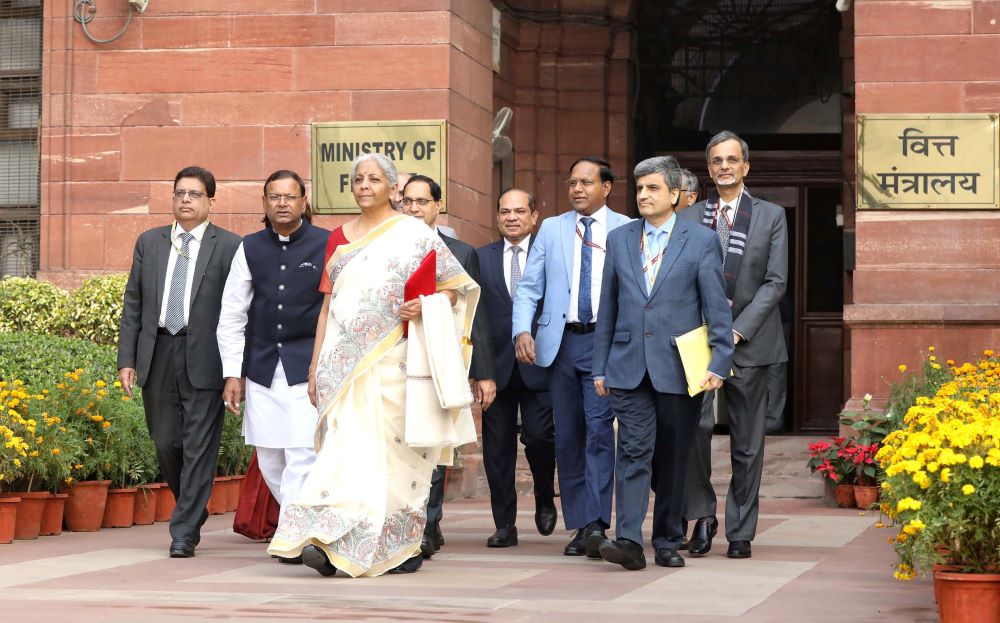
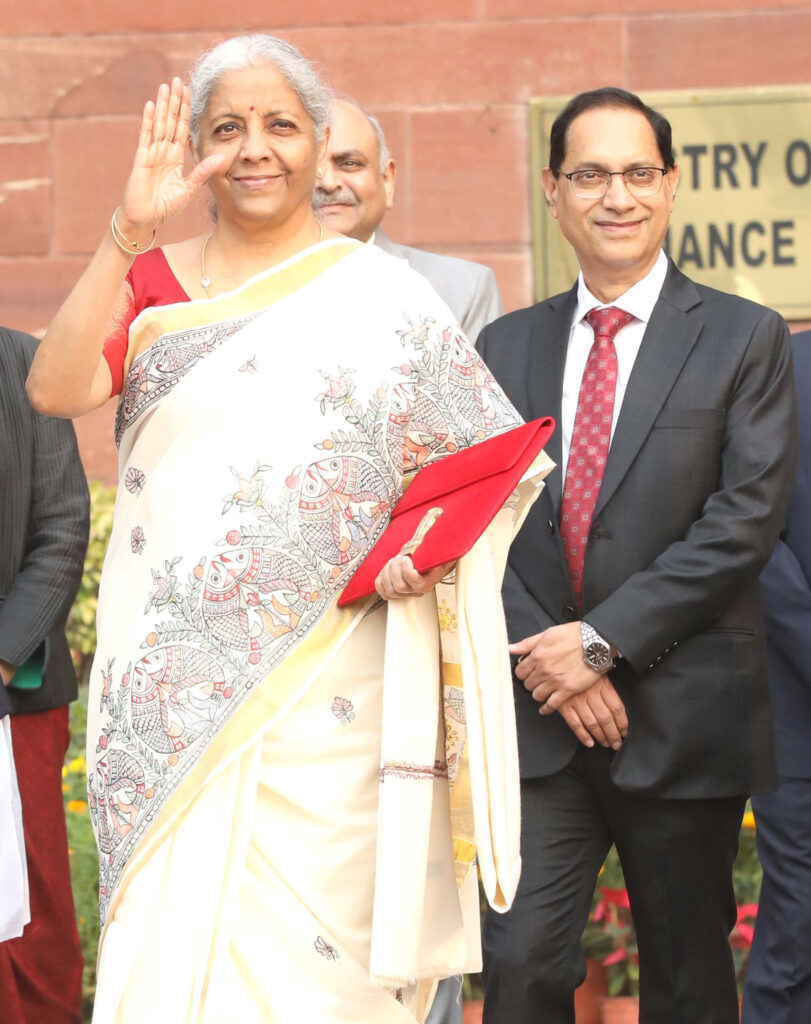
In a defining moment for India’s economy, Finance Minister Nirmala Sitharaman presented the Union Budget for 2025-26, outlining a robust framework aimed at driving long-term growth, social welfare, and economic sustainability. With a sharp focus on key sectors like Agriculture, MSMEs, Investment, Exports, and Reforms, the budget seeks to bolster the nation’s economic foundation while introducing crucial reforms that will resonate across various sectors.
Key Highlights of the Budget:
Fiscal Overview:
- Total Receipts and Expenditure:
The government estimates total receipts (excluding borrowings) at ₹34.96 lakh crore and total expenditure at ₹50.65 lakh crore. - Fiscal Deficit:
The fiscal deficit for 2025-26 is estimated at 4.4% of GDP, ensuring fiscal discipline while maintaining focus on essential economic growth and development. - Capex Spending:
₹11.21 lakh crore (3.1% of GDP) is earmarked for capital expenditure (Capex), underscoring the government’s commitment to infrastructure development.

Agriculture as the Engine of Development:
- Prime Minister Dhan-Dhaanya Krishi Yojana:
A new initiative, aimed at improving agricultural productivity, will be launched in collaboration with states, targeting 100 low-productivity agricultural districts. This will benefit 1.7 crore farmers. - Aatmanirbharta in Pulses:
A six-year Mission for Aatmanirbharta in Pulses will focus on key crops like Tur, Urad, and Masoor, with NAFED and NCCF procuring pulses from farmers over the next four years to ensure self-sufficiency. - Makhana Board in Bihar:
A Makhana Board will be established in Bihar to promote production, processing, and value addition of Makhana, a staple crop in the region. - Urea Plant in Assam:
The government will set up a urea plant in Assam with a capacity of 12.7 lakh metric tons, boosting agricultural productivity in the northeastern region.

Empowering MSMEs and Promoting Entrepreneurship:
- MSME Classification Criteria:
The investment and turnover limits for classifying Micro, Small, and Medium Enterprises (MSMEs) will be enhanced to promote growth. - Customized Credit Cards for Micro Enterprises:
₹5 lakh credit cards will be issued to micro enterprises registered on the Udyam portal, with 10 lakh cards to be issued in the first year. - Fund of Funds for Startups:
A new Fund of Funds of ₹10,000 crore will be established to support innovative startups and entrepreneurship. - Support for Food Processing in Bihar:
A National Institute of Food Technology, Entrepreneurship, and Management will be set up in Bihar, further boosting the food processing sector.
Investing in People and Infrastructure:
- Expansion of Medical Education:
To address the growing healthcare needs, the government plans to add 10,000 medical seats next year, with a total of 75,000 seats over the next five years. - 50,000 Atal Tinkering Labs:
The government will establish 50,000 Atal Tinkering Labs in government schools across India over the next five years to foster creativity and innovation among schoolchildren. - Broadband Connectivity to Rural Schools and PHCs:
Broadband will be extended to all government secondary schools and primary health centers in rural areas through the BharatNet project. - PM SVANidhi Scheme Revamp:
The PM SVANidhi scheme will be revamped with enhanced loans, UPI-linked credit cards, and capacity-building support for street vendors.
Tax Reforms and Simplification:
- Income Tax Relief:
The government has raised the income tax exemption limit to ₹12 lakh, with ₹12.75 lakh for salaried taxpayers, substantially reducing the tax burden on the middle class. - New Tax Regime:
The revised tax slabs in the new regime are designed to make taxes more equitable. Tax rates for incomes above ₹4 lakh will be progressively higher, reaching 30% for incomes above ₹24 lakh. - Rationalization of TDS/TCS:
Several tax deductions, such as for senior citizens, will see increased limits, and provisions will be made to ease compliance burdens for charitable trusts and small businesses.

Boosting Exports and Manufacturing:
- Export Promotion Mission:
A comprehensive Export Promotion Mission will be set up, with sector-specific and ministerial targets aimed at improving India’s export competitiveness. - BharatTradeNet:
A unified platform for trade documentation and financing solutions will be introduced under the BharatTradeNet initiative, making it easier for Indian exporters to reach global markets. - Support for Domestic Manufacturing:
The budget includes measures to enhance electronics manufacturing and textile sector productivity, with capital goods exemptions and support for critical minerals such as lithium-ion batteries.
Infrastructure and Urban Development:
- Greenfield Airports in Bihar:
The budget includes plans for the construction of greenfield airports in Bihar, alongside expansion projects at Patna Airport and a brownfield airport at Bihta. - Urban Challenge Fund:
An Urban Challenge Fund of ₹1 lakh crore will be set up to transform cities into growth hubs, with allocations for water and sanitation, as well as creative redevelopment. - Maritime Development Fund:
A ₹25,000 crore Maritime Development Fund will be created to support the growth of India’s shipping and maritime sectors.
Fostering Innovation and Research:
- National Geospatial Mission:
A National Geospatial Mission will be launched to create foundational geospatial infrastructure and data to improve urban and rural planning. - Gene Bank for Crops Germplasm:
The government will establish a second gene bank with 10 lakh germplasm lines to ensure future food and nutritional security. - Deep Tech Fund of Funds:
A Deep Tech Fund of Funds will be explored to support next-generation startups in emerging technological sectors.
Financial Sector Reforms:
- FDI in Insurance Sector:
The FDI limit in the insurance sector will be raised from 74% to 100% for companies that invest the entire premium in India. - NaBFID Credit Enhancement Facility:
The NaBFID will set up a ‘Partial Credit Enhancement Facility’ for corporate bonds aimed at infrastructure projects.

Conclusion:
The Union Budget 2025-26 charts a clear path toward building a self-reliant, inclusive, and innovative India. With significant investments in agriculture, infrastructure, MSMEs, and education, along with bold tax reforms and measures to boost exports, this budget aims to fuel economic growth and job creation while fostering innovation and sustainability. The government’s commitment to inclusive development and public-private partnerships stands as a testament to its vision for a prosperous and resilient India in the years to come.
