
U.S. Slaps 50% Tariffs on Indian Goods, Trade Tensions Escalate
The Voice of Chandigarh
In a dramatic escalation of trade hostilities, the United States has imposed 50% tariffs on a wide range of Indian goods, doubling the earlier 25% rate. The move, announced by President Donald Trump, comes in response to India’s continued imports of Russian oil — a stance Washington has strongly opposed.
The new tariff regime, effective August 27, 2025, will impact nearly two-thirds of India’s
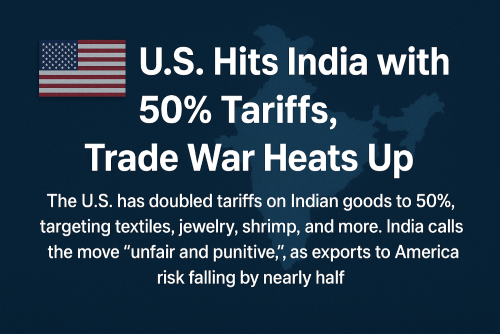
exports to the U.S., covering key sectors such as textiles, apparel, gems and jewelry, shrimp, carpets, furniture, and chemicals. However, critical industries including pharmaceuticals, electronics (notably Apple products manufactured in India), auto components, and iron & steel have been exempted.
Economists warn that the tariff shock could slash India’s annual exports to the U.S. — worth around $87 billion in 2024 — down to nearly $50 billion, posing risks to India’s economic growth and threatening millions of jobs in export-driven industries.
India has strongly condemned the move as “unfair and punitive.” Prime Minister Narendra Modi has announced countermeasures, including the ambitious “Plan 40” initiative, which aims to diversify textile exports across 40 global markets in an effort to reduce reliance on the U.S.
 Globally, reactions remain divided. China has openly backed India, denouncing Washington’s decision as “disproportionate and politically motivated.” Analysts suggest that Russia could emerge as a key beneficiary, as the tariff conflict strains U.S.–India relations and nudges New Delhi closer to alternative trade partners.
With ties between Washington and New Delhi now at one of their lowest points in years, experts warn the escalating trade war could trigger long-term strategic shifts in Asia and beyond, reshaping alliances and global supply chains.
