 Middle East Calm Brings Limited Relief as Airlines Brace for Prolonged Disruptions
The Voice of Chandigarh | Travel Trade Reporter
A period of relative calm in parts of the Middle East has offered temporary relief to global aviation, but airlines say the path to full normalcy remains uncertain as operational risks continue to linger.
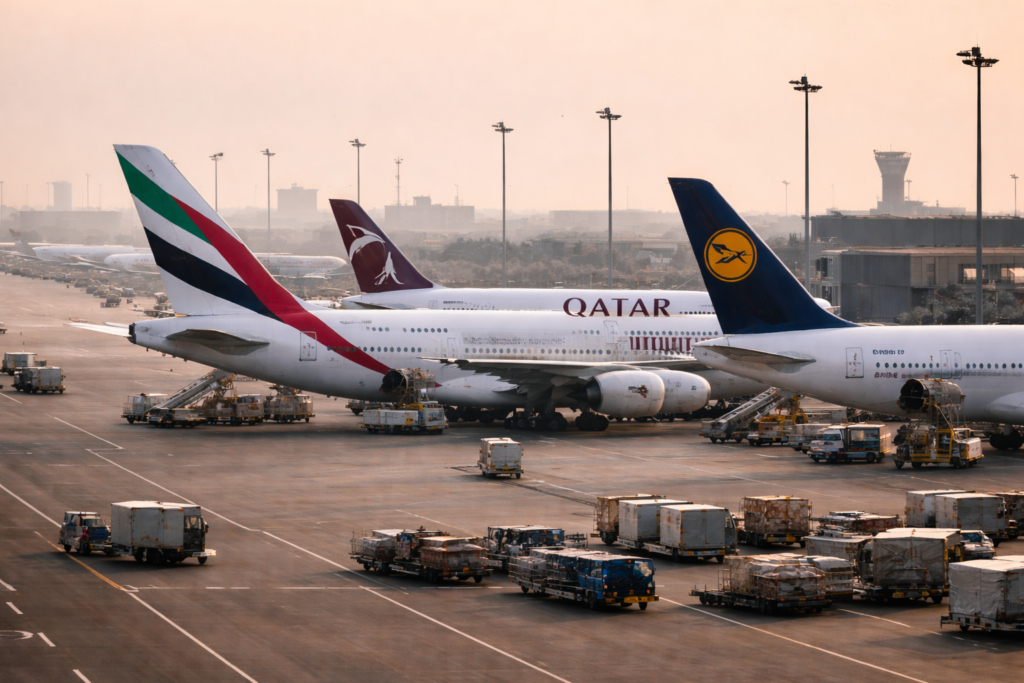
Leading carriers such as Emirates, Qatar Airways and Lufthansa are maintaining cautious flight operations, with several routes still being adjusted to avoid sensitive airspace across the region.
Industry officials indicate that while immediate tensions have eased, airspace over countries like Iran and Iraq continues to be monitored closely. As a result, many airlines are opting for longer alternative routes, increasing travel time and operational costs.
A senior aviation executive, requesting anonymity, said airlines are prioritizing safety over efficiency. “Even with the current calm, risk assessments have not changed significantly. Airlines will take a cautious approach before restoring regular routes,” the official noted.
The extended flight paths have led to higher fuel consumption and increased crew duty hours, putting additional financial pressure on airlines. Aviation analysts warn that these costs could eventually be passed on to passengers through marginal fare increases, particularly on long-haul sectors connecting Europe and Asia.
 Cargo operations are also facing challenges, with delays reported in shipments due to route diversions and scheduling adjustments. This has had a ripple effect on supply chains, especially for time-sensitive goods.
Despite these concerns, passenger demand for international travel remains steady. Airlines are focusing on maintaining customer confidence by offering flexible booking options and clear communication regarding route changes.
 Experts believe that even if stability continues in the region, a full return to pre-disruption flight patterns may take time. Airlines are expected to continue factoring geopolitical risks into their operational planning in the months ahead.
For now, the global aviation industry remains in a watchful mode, balancing optimism with caution as it navigates an evolving geopolitical landscape.
