
Fortis Mohali Doctors Give Two Critically Ill Patients, a Second Chance at Life Through Advanced ECMO Therapy
The Voice of Chandigarh
Doctors at Fortis Hospital, Mohali, successfully revived two critically ill patients – a 47-year-old woman and a 38-year-old man, who survived against overwhelming odds with the support of ECMO and specialised intensive care. A team of doctors at Fortis Hospital Mohali treated the patients with the help of ECMO, which is a highly advanced technology used in patients with severe heart or lung failure when conventional treatments are no longer effective. Often described as an artificial heart and lung support system, ECMO works by circulating blood through an external machine where it is oxygenated, carbon dioxide is removed, and the blood is returned to the body. This temporary support enables the heart and lungs to rest and recover while definitive treatment is administered.
In the first case, the 47-year-old woman was suffering from severe pneumonia and acute respiratory distress syndrome (ARDS) and was referred from another hospital in the city, in a critical condition. Despite receiving optimal ventilator support, her oxygen levels remained dangerously low and continued to deteriorate. Given the severity of her condition, the multidisciplinary critical care team at Fortis Mohali initiated VenoVenous ECMO, a specialised form of ECMO that supports patients with severe respiratory failure. She remained under intensive care for nearly three weeks. With continuous monitoring, advanced critical care management, and ECMO support, her lung function gradually improved. She was successfully weaned off ECMO and subsequently discharged home in a stable condition after a month-long battle for survival.
In another case, a 38-year-old man was admitted to Fortis Mohali after accidentally consuming Celphos, a highly toxic pesticide associated with extremely high mortality rates. Upon admission, he was suffering from multi-organ dysfunction and severe cardiac failure. Recognizing the gravity of the situation, the doctors initiated VenoArterial ECMO, which provides temporary support to both the heart and circulation. His condition remained critical during the initial phase of treatment. However, ECMO ensured adequate blood flow to vital organs while allowing time for his heart to recover from the toxic effects of the poison. After approximately seven days of ECMO support, his cardiac function showed significant improvement, and he was successfully weaned off the system. He continues to recover under close observation in the Medical Intensive Care Unit.
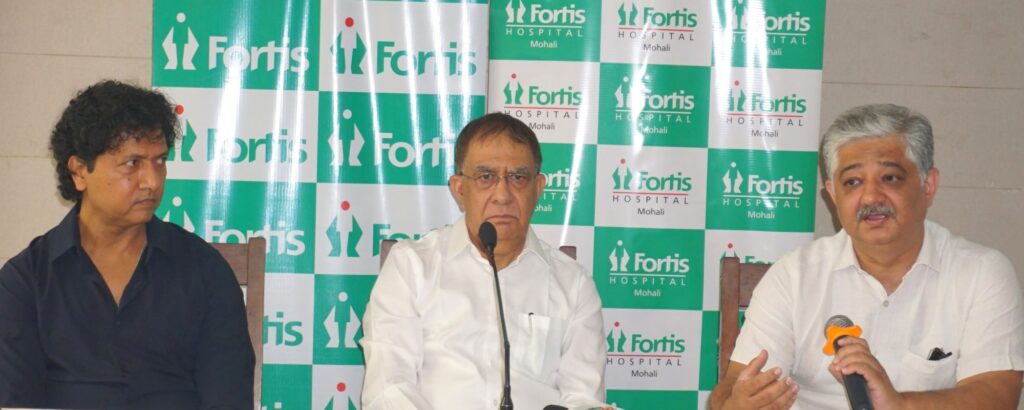
Giving details of the cases, Dr. Arun K Sharma, Director, Critical Care, Fortis Hospital Mohali said, “ECMO is often considered the last line of support for patients with severe heart or lung failure when conventional therapies have been exhausted. The successful recovery of these patients demonstrates the immense potential of this technology in saving lives that might otherwise be lost. Without access to ECMO and advanced critical care expertise, survival would have been extremely unlikely.”
Dr TS Mahant, Executive Director, CTVS (Cardiothoracic and Vascular Surgery), said, “ECMO represents one of the highest levels of intensive care medicine and requires seamless coordination between intensivists, cardiologists, cardiac surgeons, perfusionists, nurses, respiratory therapists and rehabilitation teams. Timely identification of suitable patients and early initiation of ECMO can significantly improve outcomes. As critical care continues to evolve, technologies like ECMO are redefining what is possible in the management of life-threatening medical emergencies.”
