
SGPC’s role in public affairs needs constitutional review: Indus Canada Foundation
The Voice of Chandigarh News
The Indus Canada Foundation has called for a comprehensive constitutional and legal review of institutional frameworks that, in its view, encourage identity-based politics and impede India’s journey toward becoming a leading global economic power. The Foundation specifically argued that the governing framework and public influence of the Shiromani Gurdwara Parbandhak Committee (SGPC) merit fresh examination to ensure alignment with India’s secular and democratic principles. It further stated that the Election Commission of India (ECI) holds a critical responsibility in ensuring that electoral politics remains focused on development, economic growth and national interests, which it believes are essential for India’s aspiration to secure a place among the G7 nations.
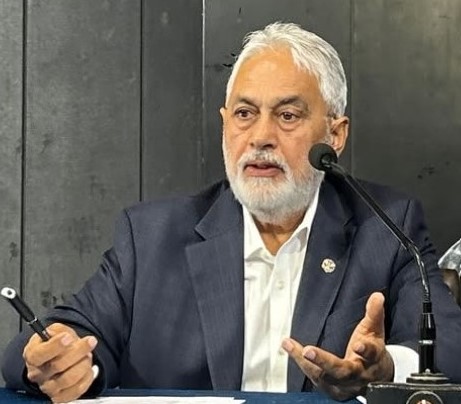
Vikram Bajwa, President, IndUS Canada Foundation expressed his concern that certain religiously influenced institutional arrangements including the governing framework of the Shiromani Gurdwara Parbandhak Committee (SGPC), deserve a fresh constitutional and legal review. He argued that any system perceived to grant excessive influence to religion in public affairs should be examined to ensure alignment with India’s secular and democratic principles.
Taking a firm stand on the issue, Vikram Bajwa said that Punjab and its people must be governed solely by the Constitution of India and the laws enacted by Parliament, the judiciary and duly elected governments and not the orders of SGPC. He argued that any attempt to create or promote parallel systems of governance based on religious doctrines whether resembling Sharia or Sunni framework must be firmly rejected in a democratic republic.He further emphasized that bodies such as the SGPC were established for the management of religious affairs and places of worship, should not be allowed to exercise influence beyond their legally defined mandate.
The Foundation emphasized that India’s future lies in strengthening institutions that unite citizens rather than dividing them along religious or sectarian lines. It called upon policymakers, constitutional authorities and civil society to work collectively towards a governance framework driven by merit, development and national interest. According to the Foundation, such reforms are essential for India to realize its full economic potential and strengthen its claim for a place among the G7 nations.
