 India and New Zealand Elevate Ties to Strategic Partnership, Sign 10 Landmark Agreements and Unveil Roadmap to 2030
The Voice of Chandigarh:
India and New Zealand have elevated their bilateral relationship to a Strategic Partnership, opening a new chapter in cooperation across defence, trade, maritime security, tourism, agriculture, education, culture and technology. The announcement came during Prime Minister Narendra Modi’s historic official visit to New Zealand—the first by an Indian Prime Minister in 40 years—where both leaders unveiled the India–New Zealand Strategic Partnership: Roadmap to 2030, providing a comprehensive framework to guide collaboration over the next four years.
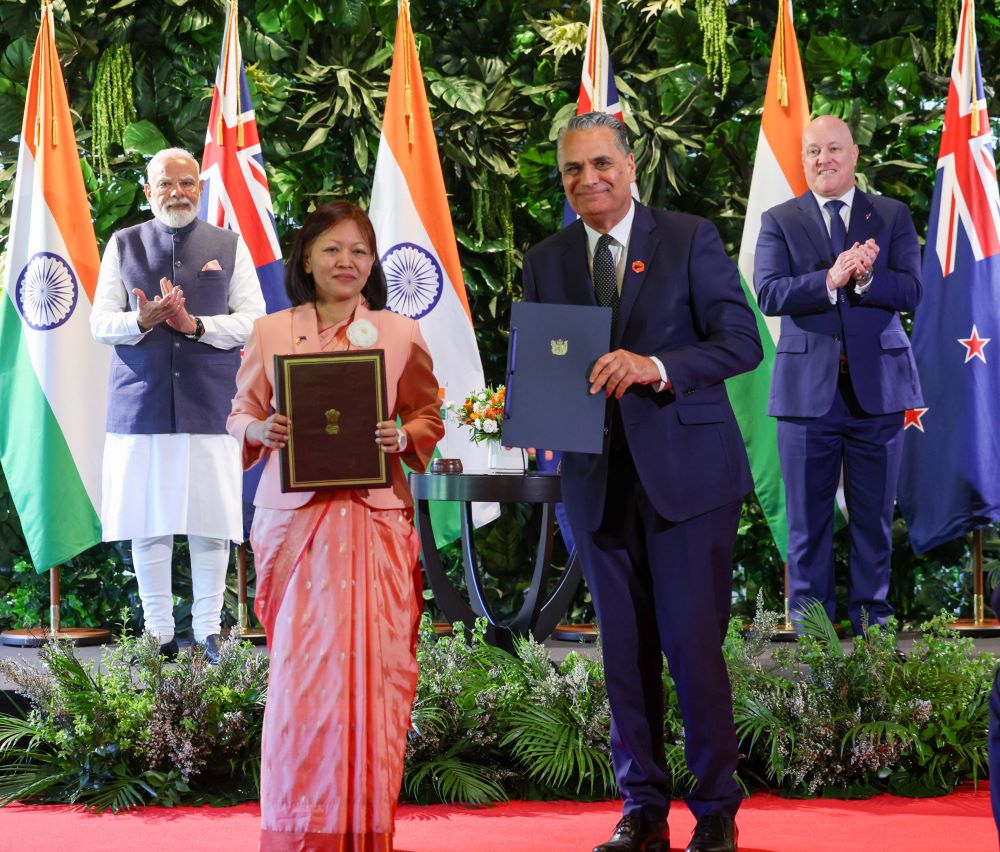
In a major outcome of the visit, the two countries signed 10 landmark Memorandums of Arrangement (MoAs) and cooperation agreements covering maritime cooperation, hydrography and nautical cartography, mutual logistics support between the Indian Navy and the New Zealand Defence Force, counter-terrorism, disaster management, animal husbandry and dairying, tourism, sports, maritime heritage and cultural cooperation. The agreements are expected to significantly strengthen strategic, economic and people-to-people ties between the two nations.
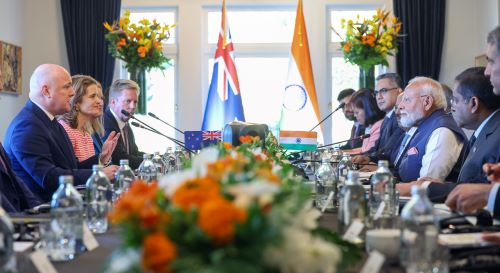
Both sides also announced an ambitious goal of doubling bilateral trade to NZ$7 billion (approximately ₹35,000 crore) by 2030, building on the recently concluded India–New Zealand Free Trade Agreement. The two governments agreed to deepen market access, encourage investment and enhance cooperation in agriculture, clean energy, innovation, skills development and digital transformation.
Defence and maritime security emerged as key pillars of the strengthened partnership. India and New Zealand agreed to establish an annual Maritime Security Dialogue, enhance naval cooperation in the Indo-Pacific, strengthen information sharing and logistics support, and expand collaboration under the Indo-Pacific Oceans Initiative (IPOI). New Zealand also nominated Maritime Security as its priority pillar under the IPOI to jointly address challenges such as Illegal, Unreported and Unregulated (IUU) fishing.
The two countries reaffirmed their commitment to combating terrorism by establishing a Joint Working Group on Counter-Terrorism, enhancing intelligence sharing and strengthening cooperation against transnational crime, cyber threats and terrorism financing.
In the agriculture sector, both nations launched a Kiwifruit Action Plan and announced the establishment of two Centres of Excellence for Kiwifruit in Nagaland and Uttarakhand to improve productivity through research, innovation and skill development. New Zealand also joined the Global Biofuels Alliance, reinforcing cooperation on sustainable energy and climate action.
Further strengthening scientific and educational ties, agreements were signed between the National Centre for Polar and Ocean Research (NCPOR) and the University of Canterbury for Antarctic research, and between NIFTEM-Kundli and Massey University to promote research collaboration, academic exchange and student mobility. The leaders also signed agreements on tourism promotion, cultural exchanges, sports cooperation and the development of the National Maritime Heritage Complex at Lothal, Gujarat, in collaboration with the New Zealand Maritime Museum.
The two Prime Ministers reaffirmed their shared vision of a free, open, inclusive and rules-based Indo-Pacific, pledged closer cooperation in multilateral forums, and directed officials from both countries to ensure the timely implementation of the Roadmap to 2030, setting the stage for a stronger and more comprehensive India–New Zealand partnership in the years ahead
