
The Voice of Chandigarh | Travel Trade Reporter
The Middle East’s aviation and cruise industries are entering a phase of global expansion, solidifying the region’s status as a major international travel hub. These industries are set to be the focus of attention at the upcoming Arabian Travel Market (ATM) 2026, which takes place at the Dubai World Trade Centre on 4-7 May.
 According to the ATM Travel Trends Report 2025, developed in partnership with Tourism Economics, an Oxford Economics company, Middle East air passenger demand is projected to grow by 23% between 2025 and 2030, driven by ambitious national tourism strategies, record airport performance, and unprecedented aircraft investment throughout the GCC.
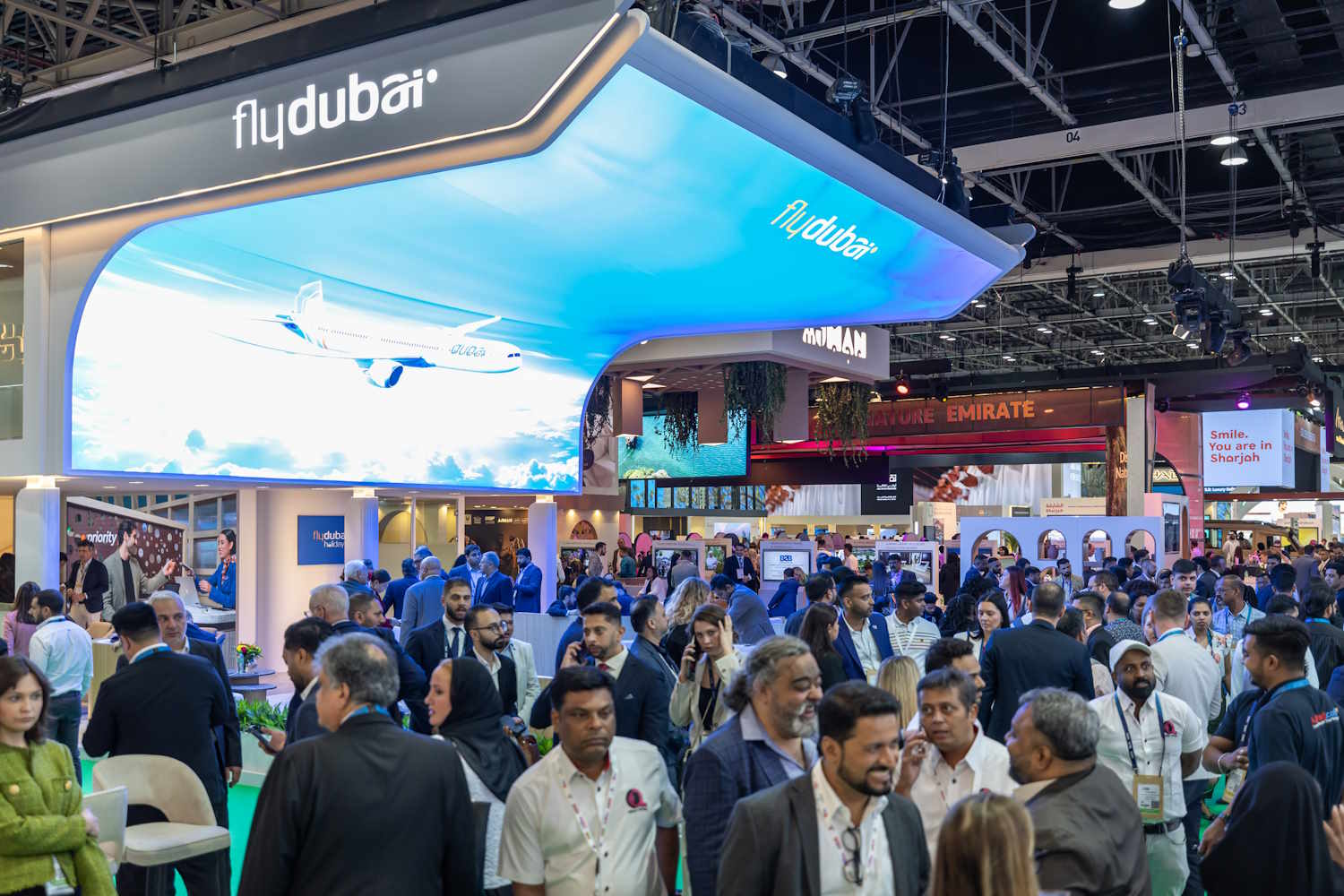
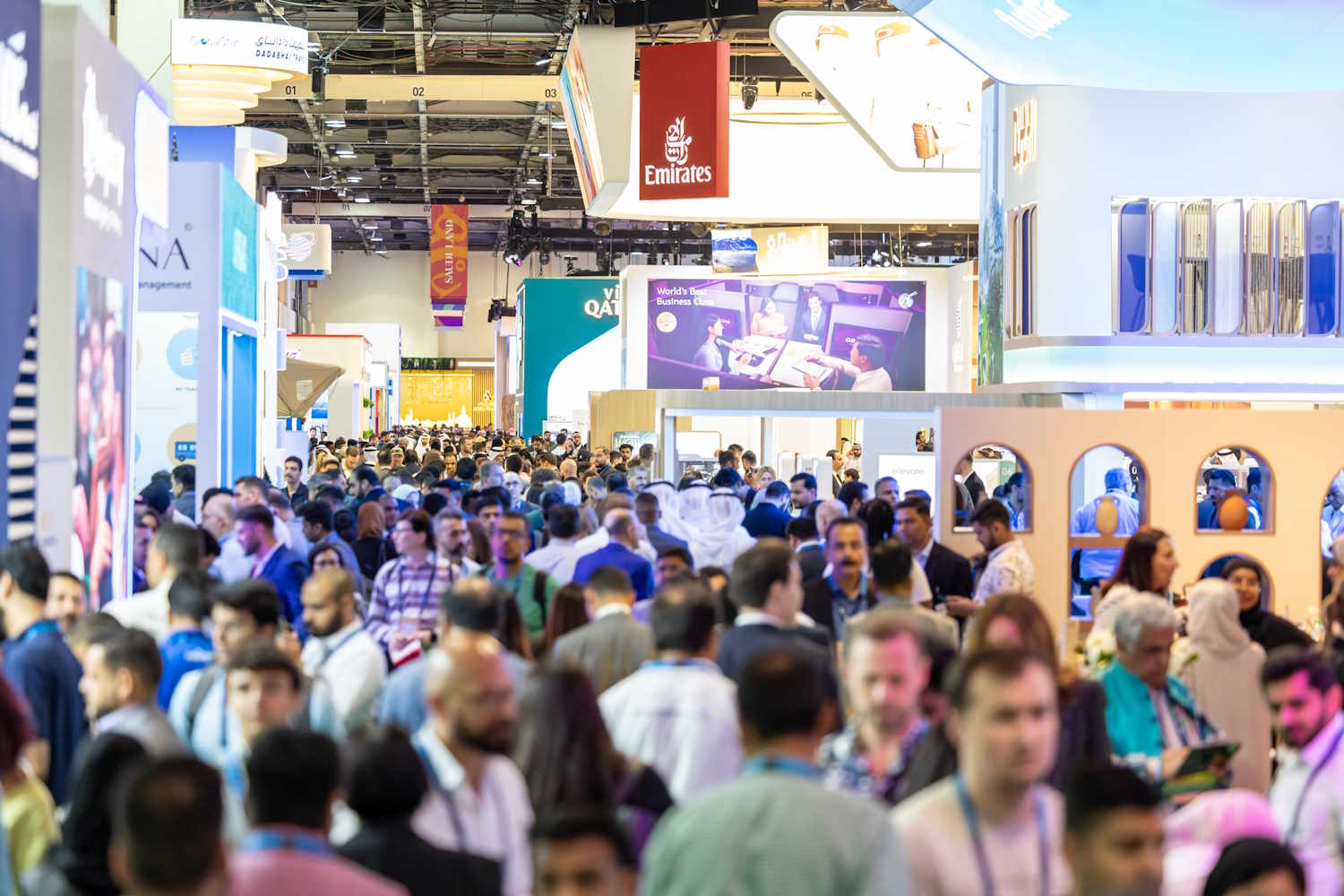
The region’s four largest carriers, Emirates, Etihad Airways, Qatar Airways, and Saudia, have placed nearly 780 aircraft orders with Boeing and Airbus, underscoring long-term confidence in global demand. Meanwhile, Middle East airlines collectively account for 12% of all new unfilled aircraft orders worldwide, with GCC carriers responsible for 93% of those orders, according to the report.
The expansion of fleet capacity is directly reflected in the scale of global connectivity now achieved by Middle Eastern carriers. Qatar Airways serves more than 170 destinations worldwide, while Etihad Airways is set to operate a fleet of over 110 aircraft, connecting to more than 90 destinations as of the end of 2025. Emirates currently flies to 140 destinations across Africa, the Americas, Asia, Europe, the Middle East and the Pacific, and Saudia operates direct services to over 90 international destinations. Together, these networks underscore the region’s growing role as a global aviation super-connector, linking markets across six continents with increasing frequency and reach.
Furthermore, Dubai-based Maldivian airline, Beond, has recently announced plans to set up operations in Bahrain, strengthening the kingdom’s position as a hub for luxury travel, while AirAsiaX, the Malaysian low-cost airline based in Kuala Lumpur, has selected the country as a regional bridge to connect Asia and Europe, significantly boosting tourism in the process.
 Danielle Curtis, Exhibition Director ME, Arabian Travel Market, said: “Middle Eastern carriers connect hundreds of destinations across six continents, firmly establishing the region as one of the most strategically connected aviation hubs in the world. This unmatched connectivity is accelerating inbound and outbound tourism growth, strengthening global trade corridors, advancing business events, and deepening cultural exchange between markets.
“At ATM 2026, we will showcase the full scale of this global network, providing the space where aviation leaders can shape the next phase of fleet expansion, smart mobility and sustainable growth as we look ahead to the next era of travel.”
The aviation outlook will be examined in depth during the Aviation Predictions 2030: Networks, Fleet Futures & the Future of Mobility session on the Global Stage, alongside The State of Travel: Inflation, Polycrisis & the New Travel Reality, presented by Euromonitor and Asia-GCC Corridor: The Next Great Growth Engine.
On the Future Stage, sessions including Automated Aviation: Smarter Skies, Cabins & Lounge Experiences and The Business Case for Booking with Flexibility will examine how AI, biometrics and next-generation aircraft are transforming the passenger journey.
Leading aviation exhibitors confirmed for ATM 2026 to date include Emirates, Qatar Airways, flydubai, flynas, flyadeal, dnata, Icelandair, and Air Charter Service, reinforcing ATM’s status as a truly global aviation marketplace.
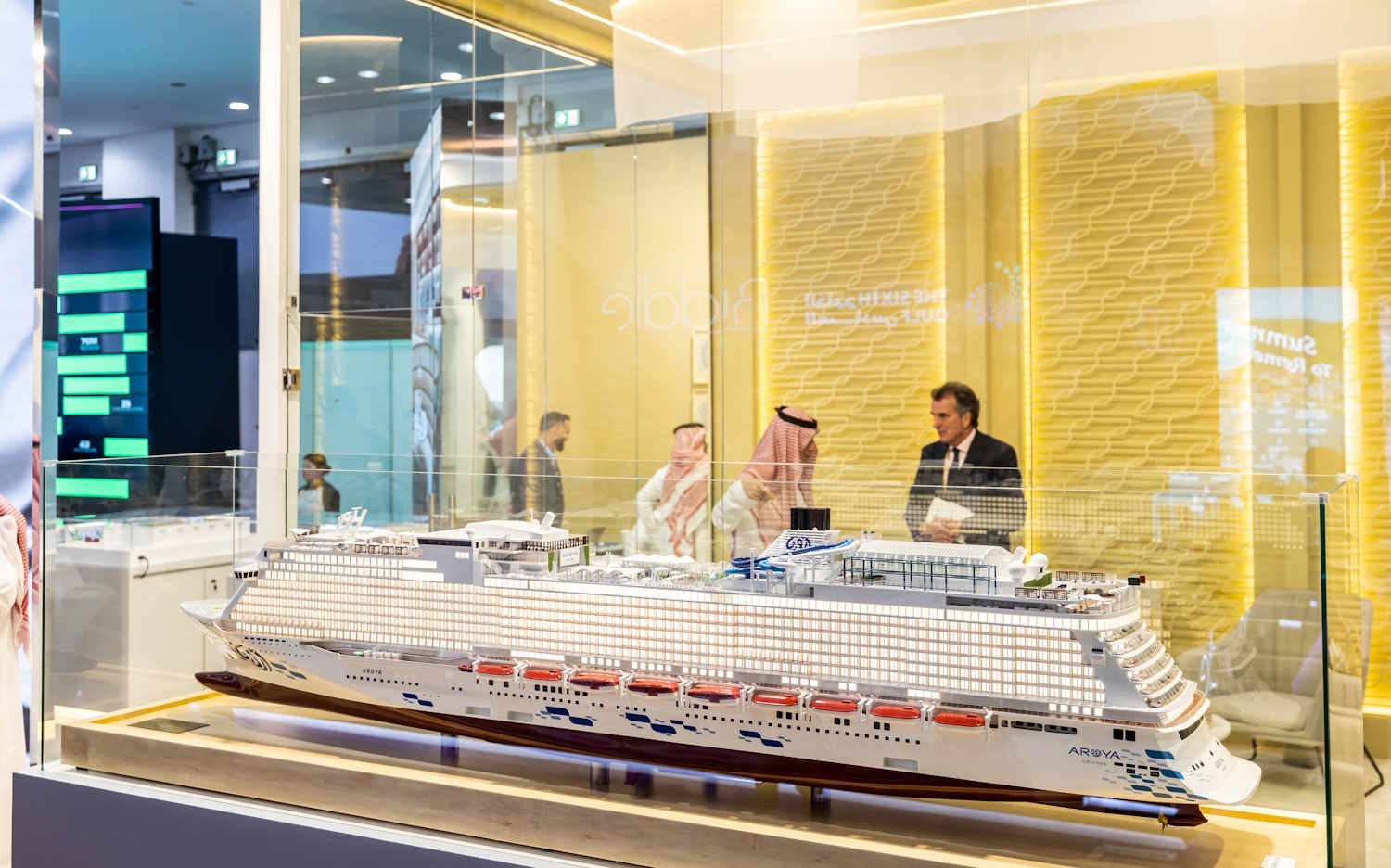 Cruising is also experiencing strong growth. According to Cruise Lines International Association (CLIA), global cruise passenger volumes are expected to reach 42 million by 2028, up from 34.6 million in 2024.
Regionally, the Middle East market was expected to welcome more than 2 million cruise passengers in 2025, with over 300,000 port visits across destinations including Dubai, Abu Dhabi, Doha, Aqaba, and Salalah, according to the trends report. The Red Sea region alone was projected to attract approximately 500,000 passengers in 2025, with more than half calling at Jeddah.
Furthermore, Tourism Economics research shows that travellers interested in visiting the Middle East are almost twice as likely to consider a cruise holiday as those considering other regions, highlighting significant growth potential.
 “With new cruise lines launching in Saudi Arabia and expanded Red Sea and Arabian Gulf itineraries, the region is strengthening its position on the global cruise map. ATM 2026 will provide a platform for cruise leaders and destination stakeholders to collaborate on sustainable growth strategies,” added Curtis.
Cruise insights will be featured on the Global Stage during Cruising Insight: Ripple Effects of the Blue Economy and the roundtable Cruise Leaders: Putting Cruise on the Map, with participation from Oxford Economics, Ayan Consulting, Celestyal Cruises, Inchcape Shipping Services and TUI Cruises.
Confirmed cruise exhibitors include Cruise Saudi, MSC Cruises, Crystal Cruises, Oceanwide Expeditions and CruiseXplore, among others.
 With more than 55,000 travel professionals and over 2,800 exhibiting companies from 166 countries expected to participate, ATM 2026 will explore the future of travel under the theme “Travel 2040: Driving New Frontiers Through Innovation and Technology,” highlighting growth trends and innovations that are shaping the industry’s next chapter.
